

Big Bamboo, developed by Push Gaming, has quickly become a prominent title among high-volatility slots, largely because its intricate free spin feature is where the biggest payouts live. We have spent countless sessions analyzing the mechanics, and one pattern keeps emerging: even experienced players ruin their own sessions by making avoidable mistakes once the bonus round starts. The game uses a 5-reel, 4-row grid with 20 fixed paylines set against a serene bamboo forest backdrop, but beneath that calm surface rests a mathematical structure that penalizes impulsive decisions. The default RTP is 96.13%, though operators may offer lower configurations, and the maximum win potential reaches 50,000 times the stake. That ceiling is almost exclusively reachable during the free spins, where wild multipliers, golden bamboo symbols, and a collection mechanic all combine. Comprehending how to navigate these rounds without falling into common traps turns Big Bamboo from a frustrating experience into a calculated endeavor. We will walk through the specific errors that occur when players get caught up in the excitement and show exactly how to avoid them.
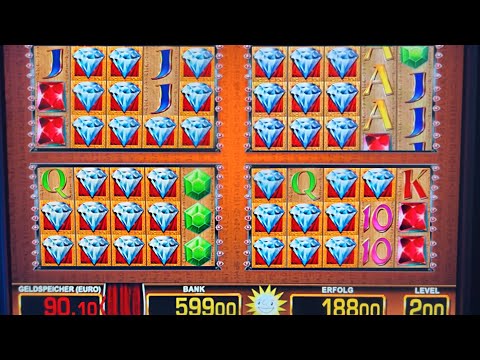
Identifying the Golden Bamboo Collection Feature
In the free spins, a distinct progress bar appears above the reels, and completing it with golden bamboo symbols triggers one of the most impactful mechanics in Big Bamboo. Each time a golden bamboo symbol hits, it is gathered, and after every fourth accumulation, you receive three additional free spins plus a guaranteed minimum multiplier boost for all remaining wilds. The mistake we come across most commonly is players treating golden bamboo symbols as mere extras rather than the primary goal of the bonus round. When you focus solely on line wins and overlook the collection meter, you overlook the strategic layer that differentiates a mediocre bonus from a life-changing one. The additional spins are not just a quantity rise; they restart the spin counter and prolong the window during which the boosted multipliers can interact with high-paying symbols like the panda or the tiger. A bonus that begins with eight spins can feasibly stretch to twenty or more if you continue hitting the collection thresholds, and each extension carries progressively higher wild multipliers.
Another subtle mistake involves presuming that golden bamboo symbols appear randomly with no pattern. While the distribution is controlled by the RNG, the symbol only appears on reels two, three, and four. This indicates that during free spins, your focus should rest disproportionately on the middle three reels. We have observed players obsess on reel five anticipating for a high wild multiplier, while the golden bamboo symbols on the central reels quietly accumulate and deliver far more worth over the extended feature. Understanding this spatial restriction aids you assess the round’s progress in real time. If you are halfway through your initial spins and have collected only one or two golden bamboo symbols, the likelihood of achieving the first extension threshold is low, and you should temper your expectations. If the meter completes quickly early on, the round’s expected value has already changed upward, and you can play the remaining spins understanding the mathematics are working in your favor.
Managing Your Wager Prior to Triggering Free Spins
The wager you select prior to any scatter appearing determines the entire financial outcome of the free spin round, yet we regularly notice players ignore the relationship between stake and bonus volatility. Big Bamboo offers a extensive wager range, usually beginning at 0.10 credits and reaching up to 100 credits per spin, making it suitable to both cautious players and high rollers. The misstep is not about selecting a precise amount, but about varying your bet size unpredictably in the spins approaching the bonus. The random number generator does not modify its scatter frequency based on your stake, but your real risk of loss does. If you have been spinning at 0.50 credits and abruptly increase to 5.00 credits expecting to trigger a bigger bonus, you are merely speeding up the rate at which your balance can diminish while seeking an event that continues equally probable at any bet level. When the free spins eventually trigger at the higher stake, the overall figure of the win will be larger, but so will the losses you accumulated during the chase, regularly offsetting the benefit.
A more structured method requires allocating a fixed session bankroll and choosing a bet size that allows for at least 200 spins before the balance runs out. This guideline comes from noting the usual scatter hit rate in high-volatility slots, where empty periods of 150 to 250 spins between bonus triggers are not uncommon. If your bet is too high relative to your bankroll, you risk depleting your funds prior to the free spin round ever occurring, which is the most fundamental error of all. We also caution against the usual habit of lowering your stake right after a bonus round finishes, unless that was part of a prearranged scheme. The emotional snare is the impression that the game owes you another feature soon, driving you to maintain high stakes. In reality, each spin is unrelated, and the sole factor you control is how much you wager per spin. Keeping a uniform wager and refraining from the impulse to seek with elevated stakes keeps the free spin rounds you do trigger in line with your general risk appetite.
Decoding the Free Spin Trigger System
The initial layer of missteps happens before a single free spin even plays out, rooted in a misunderstanding of how the bonus round really starts. In Big Bamboo, the scatter symbol is a golden coin decorated with a panda, and landing three, four, or five of these on the reels gives eight, ten, or twelve free spins accordingly. We frequently see players presume that more scatters just mean more spins, but the difference in expected value between the tiers is not linear. The shift from three to four scatters adds two extra spins, which appears modest, but it also raises the probability of triggering the golden bamboo collection feature earlier in the sequence. Go in with only eight spins and you have fewer chances to land the special symbols that advance the progress bar. A cold streak of dead spins can destroy the entire round before the multiplier accumulation gains any traction. The mistake is not in accepting eight free spins, but in viewing all entry points as equal and failing to adjust your mental expectations.
Another trigger-related mistake involves the gamble feature that appears right after the scatters land. The game presents a wheel with green and red segments, offering the chance to gamble the awarded spins for a greater number, up to a maximum of twelve. We have observed players reflexively smack the gamble button without reviewing the probability distribution presented on the wheel. The odds are not static; they vary depending on how many spins you now hold. If you already have ten spins and try to gamble for twelve, the risk of dropping back to the base game is substantial, with the red losing segment commonly occupying more than half the wheel. The correct method is to evaluate the gamble as a separate mathematical decision. For three scatters, gambling from eight to ten spins can be worth the risk because the relative gain in bonus potential is large. For four scatters, the incremental gain of moving from ten to twelve is marginal, while the chance of forfeiting everything stays considerable. Recognizing this gradient prevents you from leaving empty-handed from a guaranteed bonus.
Patience and Patience: Preventing Premature Bonus Purchases
Big Bamboo includes a bonus buy feature where players can buy direct entry into the free spin mode for a fixed multiple of their current bet, typically around 100x the stake. This functionality is present in markets that permit it, and it skips the base game entirely. The error we notice repeatedly is players utilizing the bonus buy as a workaround after a trying dry spell, without evaluating whether the cost matches the expected return. The bonus buy price is established by the provider to mirror the average value of a naturally triggered bonus, but with high-volatility slots, the range of outcomes is extremely wide. You can purchase ten bonuses in a row and get returns well below the purchase price each time, because the average is distorted by the rare 50,000x jackpot occurrences that you may never individually hit. We have noted players exhausting their entire deposit through consecutive bonus buys, convinced that the next one surely has to pay, only to end the session with nothing. The error is treating the bonus buy as a certain value proposition rather than a high-risk gamble with a negative expected value after considering the operator’s margin.
A more prudent approach is to handle the bonus buy as a distinct product with its own bankroll assignment. If you choose to use it, establish a hard cap of no more than two or three buys per session, and accept that the most likely conclusion is a loss. The benefit of the bonus buy is that it eliminates the time and doubt of waiting for scatters, but it does not modify the underlying mechanics of the free spin round itself. Another timing mistake occurs when players buy the bonus immediately after a big natural win, confusing the two events. The game has no memory; a large win in the base game has zero effect on the performance of a purchased bonus. We recommend maintaining a detailed journal of your bonus buy results to base your expectations in personal data rather than highlight reels. Over a large dataset, the numbers will trend toward the theoretical RTP, but in the short term, fluctuation dominates. Patience is not just a trait in waiting for scatters; it is the self-control to steer clear of impulsive bonus buys that can wipe out hours of careful bankroll management in seconds.
A Gamble Feature: A Double-Edged Sword
We touched on the gamble wheel shortly, but it merits its own dedicated analysis because it is the one feature that causes the most self-inflicted damage during free spin rounds. After the scatter trigger, the wheel shows a binary choice: gamble for more spins or collect and start the bonus right away. The wheel’s green segment indicates the chance to advance to the next tier, while the red segment means giving up the bonus altogether. What many players do not realize is that the gamble is not a single opportunity; you can gamble several times in succession if you keep succeeding, moving from eight to ten, then ten to twelve spins. The error is considering each gamble as an independent event with the same risk profile. In reality, the probability of safely navigating two consecutive gambles is the product of the individual probabilities, which drops steeply. Say the first gamble gives a 60% chance of success and the second offers 45%. Your overall chance of reaching twelve spins from eight is only 27%. We have watched players assuredly press gamble twice, unaware they are accepting a nearly three-in-four chance of giving up everything.
There is also a psychological component that intensifies the error. The visual design of the wheel, with its luminous segments and tense spin animation, triggers an emotional response that bypasses rational calculation. We advise a simple rule: decide before you ever see the wheel what your gamble policy will be. For example, you might commit to always gamble from eight to ten spins but never gamble from ten to twelve. This pre-commitment strategy removes the in-the-moment temptation and matches your actions with the mathematical reality. Another common misstep is gambling when the bonus was triggered on a very low bet. If you were betting at the minimum stake, giving up the bonus costs you very little in absolute terms, but the potential upside of extra spins is also minimized. In such cases, the emotional sting of forfeiting the bonus often exceeds the modest gain of two additional spins, making the gamble a negative experience regardless of the outcome. Knowing when the gamble is worth taking and when it is an unnecessary risk is a sign of a player who has perfected Big Bamboo’s free spin rounds.

Analysis After Free Spins: Insights from Each Session
The last group of issues occurs after the free spin round ends, when the majority of players either spin again right away or close the game without analyzing what just occurred bigbamboos.com. Big Bamboo offers a thorough results breakdown at the end of each bonus feature, displaying the total winnings, the spins count, the top multiplier obtained, and the bamboo collection progress. Disregarding this data means you lose the chance to fine-tune your comprehension of the game’s variance. We suggest taking a screenshot or jotting down the main metrics, particularly the count the bamboo meter activated extensions. More precisely, track the listed items:
- Complete win multiplier
- Free spins consumed (with extra rounds)
- Maximum wild multiplier achieved
- Bamboo collection milestones achieved
- Trigger method (natural or bought)
Over multiple sessions, trends will surface that shape your subsequent strategies. You may find that your most lucrative rounds regularly achieved at least two meter milestones, which reinforces the value of the bamboo symbols over basic wild multipliers. Lacking this review, you stay at the effect of the recency effect, overvaluing the most recent big win or loss and taking subsequent bet size or gamble decisions based on feelings rather than analysis.
Another after-round mistake is immediately reinvesting a large free spin win into higher stakes without a break period. The adrenaline spike from a 500x or 1,000x win can skew your perception of risk, making a 10.00 credit bet feel as insignificant as the 0.50 credit bet you were using before. We suggest a mandatory pause of at least five minutes after any win exceeding 200x your stake. During this pause, analyze the round’s mechanics: did the win come from a single massive line hit with stacked wilds, or was it a gradual accumulation of smaller wins extended by golden bamboo collections? The answer tells you whether the result was a tail-end outlier or a more consistent event. If it was the former, chasing a repeat with increased stakes is a sure way for rapid losses. If it was the latter, you have confirmed that your understanding of the feature’s mechanics is sound, and you can resume to the game with the same bet size and a clear head. This reflective habit turns Big Bamboo from a game of pure chance into a learning loop where each free spin round, win or lose, adds to your long-term skill in managing volatility.
We also see players measure their free spin results to curated clips on streaming platforms or social media, where only extreme wins appear. This produces an unrealistic benchmark that turns a respectable 80x bonus appear like a failure. The mathematical reality is that most Big Bamboo free spin rounds yield between 20x and 60x the stake, with 1,000x-plus outcomes landing in a tiny fraction of bonuses. Keeping your own records establishes an internal database showing the true distribution, the only reliable antidote to distorted expectations from highlight reels. When you understand that a 40x bonus is a solid outcome, you are less likely to raise your bet size chasing a phantom jackpot that appears more in marketing than in probability tables. The discipline of post-round analysis finishes the loop on all the other errors we have discussed, anchoring your play in data rather than impulse.
The role of Wild Multipliers and Why They Can Backfire
During the free spin rounds, wild symbols appear with attached multipliers spanning from x1 up to x10, and they replace for all regular paying symbols. The critical error we notice is players mentally overvaluing a single high-multiplier wild without factoring in its placement on the grid. A x10 wild located on reel five adds nothing if the first four reels fail to align a winning combination. Big Bamboo rewards left to right on its 20 fixed lines, so a wild multiplier only activates when it fills a sequence that begins on reel one. We have observed sessions where a player rejoices at a screen full of high-value wilds, only to discover that none of them aligned to a valid payline because the base symbols on the early reels did not correspond. The game focuses its volatility into these near-miss moments, and taking visual spectacle for actual payout is a fast track to tilted decision-making.
Beyond placement, the interaction between multiple wild multipliers on the same payline is another area where confusion causes costly assumptions. When two or more wilds add to a winning line, their multipliers are combined together before being applied to the line win. A common misplay is to believe the multipliers multiply each other, which would generate astronomical figures. The actual additive rule implies a x5 wild and a x3 wild on the same line yield a combined x8 multiplier, not x15. This distinction is significant enormously when you are assessing whether to continue a session. If you base your bankroll decisions on an inflated expectation of multiplicative wilds, you will misjudge the return frequency and likely overspend your budget. We advise pausing after any significant free spin win and manually verifying the multiplier calculation in the game’s paytable to learn the additive rule, so you never misread a result again.
Be the first to post a comment.